
From Sacred Plant to Modern Medicine: History of Cannabis
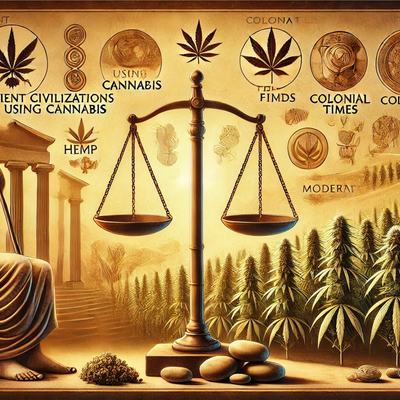
Throughout human civilization, few plants have woven themselves into the fabric of society quite like cannabis. Its remarkable journey spans continents and millennia, transforming from an ancient fiber crop into a subject of modern medical research and legislative debate.

Roots in Ancient Civilizations
The earliest threads of cannabis history intertwine with the dawn of agriculture in ancient Asia. Archaeological evidence reveals that around 500 B.C., early civilizations discovered the plant’s versatility, primarily utilizing its sturdy fibers for crafting essential materials. However, the plant’s significance extended far beyond its practical applications.
In the mystical realm of ancient India, cannabis found its place among the sacred. The Vedic texts, composed around 1500 B.C., elevated it to divine status, listing it among five revered plants. Meanwhile, across the vast landscapes of ancient China, Emperor Shen Nung was documenting its therapeutic properties in 2737 B.C., laying the groundwork for Traditional Chinese Medicine.
The Healing Traditions
As trade routes expanded and knowledge spread, cannabis established itself in various medical traditions. Islamic physicians of the medieval period incorporated it into their sophisticated pharmacopeia, particularly noting its effectiveness against nausea. When this knowledge reached Western shores in the 19th century, it sparked a medical renaissance, with cannabis-based remedies becoming staples in pharmaceutical catalogues.
Spiritual Dimensions
Beyond its medicinal applications, cannabis became deeply embedded in spiritual practices across cultures. In India, it transcended mere utility to become an offering to Lord Shiva, integrated into religious ceremonies and spiritual quests. Centuries later, the Rastafarian movement would embrace cannabis as a cornerstone of their spiritual practice, viewing it as a sacrament for meditation and community bonding.
Сultural, medicinal, and legal evolution of cannabis
The 20th century marked a dramatic shift in cannabis’s story. The United States’ Marijuana Tax Act of 1937 cast a long shadow, effectively criminalizing the plant nationwide. This legislation triggered a domino effect of prohibition that would reshape global drug policy for decades to come.
However, the late 20th century witnessed the beginning of a remarkable transformation. California’s groundbreaking 1996 medical cannabis legislation marked the first crack in prohibition’s foundation. The movement gained momentum when Colorado and Washington state ventured into recreational legalization in 2012, challenging decades of restrictive policies.
Modern Medical Discoveries
Today’s chapter in cannabis history is being written in research laboratories and medical facilities worldwide. Scientists are uncovering the intricate mechanisms of cannabinoids, revealing potential applications that ancient healers might have intuited but never fully understood. From epilepsy management to cancer treatment support, modern medicine is rediscovering cannabis’s therapeutic potential through rigorous scientific investigation.
The Ongoing Narrative
The story of cannabis reflects humanity’s complex relationship with the natural world. Its journey from ancient fiber to forbidden substance to emerging medicine demonstrates how societal attitudes and scientific understanding evolve over time. As research advances and legal frameworks adapt, we continue to unlock new understanding of this remarkable plant.
Looking ahead, cannabis’s story seems far from complete. Current developments in medical research, legal reform, and social acceptance suggest that future generations may add even more fascinating chapters to this ancient plant’s continuing narrative