
THCV Explained: The THC Comparison
Tetrahydrocannabivarin, more commonly referred to as THCV, is one of the most interesting discoveries in cannabis science. Although THC garners much of the attention when it comes to the effects of cannabis, THCV affects the endocannabinoid system in a way that contradicts everything we thought we knew about cannabinoids.
THCV vs THC
In contrast to its more famous cousin, THC, which stimulates euphoric effects by binding to CB1 receptors in the brain, THCV actually works as an antagonist of CB1 receptors at lower doses by essentially blocking those same receptors – thereby producing the exact opposite neurological response! THCV can even suppress appetite rather than stimulate it; and can evoke a more alert and focused state than the relaxed and hungry state typical of THC.
Structural and Pharmacological Differences
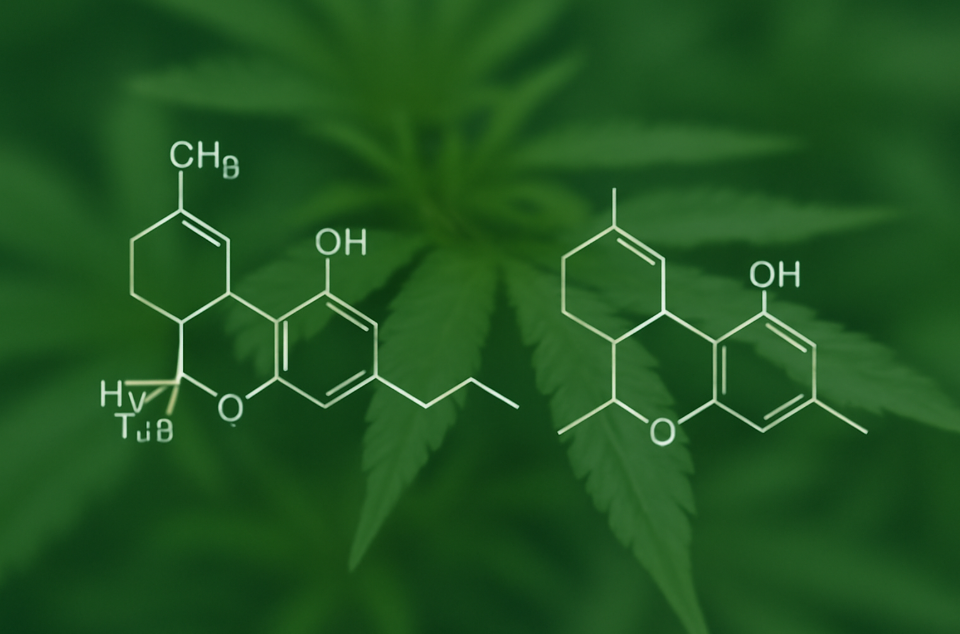
The differences in structure may not seem great; THCV has a propyl side chain and THC has a pentyl chain, but the difference of one atom in the length of the side chain produces completely different pharmacological profiles. THCV can actually produce a “counter” effect when users consume them together because of the unique way THCV interacts with receptors producing what researchers have called “entourage effect modulation.”
The Origins and Genetics of THCV
Cannabis strains that are high in THCV typically originated from the cannabis sativa family and have their natural habitat in Africa with landrace origins mostly found in South Africa, Nigeria, and Ghana. In these regions, unique landrace strains of cannabis developed due to the pressure of the environment and geographical isolation from other regions. Modern breeding programs have turned their attention to conserving and developing THCV-rich genetics alone; one breed has an approximately 4-8% THCV.
Duration and Onset of Effects
The duration and onset of THCV effects differ markedly. Whereas THC can be effective for a few hours, THCV tends to produce shorter effects of 1-3 hours duration. This is favorable for consumers seeking targeted therapeutic benefits without a prolonged altered-state of consciousness. In addition, THCV has a higher boiling point than THC, which indicates it requires higher temperatures to be properly vaporized.
Therapeutic Potential of THCV
THCV continues to be investigated for its therapeutic properties because it has potential uses beyond the recreational market. Studies indicate THCV may be helpful in blood sugar regulation, which may contribute to managing diabetes. Its appetite suppressant properties may be advantageous and help programs geared toward managing weight. Additionally, there is not much but preliminary research suggesting potential neuroprotective properties that may ultimately assist with disorders such as Parkinson’s disease.
Market Availability and Industry Considerations
Increased market availability of THCV products is still developing as new extraction and isolation methods are generated; we now see THCV dominant strains, isolated THCV extracts, and products that consider a combination THCV and other cannabinoids for more defined effects. Like most cannabinoids, accurate labeling and dosing still tackle poor industry-standardization of testing.
Dosage Considerations
Dosing with THCV requires considerations from the consumer. Low doses (2.5-7.5mg) will produce the antagonist effects noted above. Roughly 7.5mg-15mg+ is considered threshold doses of higher cannabinoids and will begin activating CB1 receptors and possible mild psychoactive effects. Like some mushrooms, dose-dependent relationships seen with other cannabinoids are not observed with THCV.
Future Directions in Research
The future of THCV looks promising for all cannabinoids as researchers strive to understand how it works and how it might be applied in the future in a clinical prospective. Current clinical trials for THCV investigate metabolic disorders, anxiolytic effects and cognitive enhancement. The more we know, the more THCV may become a reality in a future cannabiology where THCV can target effects that counter or may augment traditional THC-based therapies.