
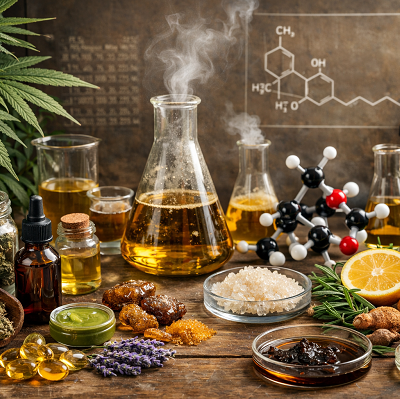
The Entourage Effect: Buzzword or Real Science?
This article examines whether there’s real science behind the Entourage Effect, which proposes that all the compounds in the cannabis plant — including cannabinoids, terpenes, and flavonoids — work synergistically to produce a better response than isolating each compound individually.
Mechoulam and Ben-Shabat first described the Entourage Effect in their 1998 paper. While marketers have adopted the term to promote “full-spectrum” products, scientists remain engaged in a very interesting argument: does this represent a biological phenomenon, or simply a creative way to market a product? Find more news and insights on cannabis in our cannabis news blog.

Compare: Isolate vs. Full-Spectrum
In order to assess this debate, let us examine how these different product types interact with the human body.
Product Type | Composition | Biological Action |
Isolate | 99%+ Pure CBD or THC | Targeted, predictable, but often requires higher doses for efficacy. |
Broad Spectrum | Multiple cannabinoids (minus THC) | Synergy between compounds without the psychoactive risk of THC. |
Full Spectrum | All natural compounds (THC, CBD, Terpenes) | Potential “Entourage Effect” where minor compounds modulate major ones. |
Science Behind Synergy
It is theorized that small molecules act as molecular cheerleaders or buffers for major cannabinoids. These are the primary ways that science would propose that the entourage effect could occur:
- Modulation of Pharmacokinetics: Some terpenes increase the blood brain barrier’s permeability allowing cannabinoids to be absorbed into the CNS more readily.
- Reduction of Adverse Effects: There is substantial evidence suggesting that CBD reduces anxiety and paranoia experienced by some patients when using high amounts of THC through altering how THC binds to the CB1 receptor.
- Multi-targeted signaling: Rather than engaging a single “button” in the body, multiple compounds may engage several receptors producing a more equitable therapeutic outcome.
Evidence vs. Skepticism
Many users report improved results with whole-plant therapy; however, clinically collected data is still developing.
Case for “Real Science”: Dr. Ethan Russo’s 2011 study demonstrated that terpenes such as myrcene (a sedative) and limonene (an antidepressant/mood enhancer), significantly altered the subjective effects of THC creating a scientifically-based explanation for why various strains of plants provide unique “vibes”.
Case for “Buzzword”: Skeptics believe many commercial claims regarding entourage are derived from in-vitro cell studies (as opposed to clinical trials involving humans). They claim that due to extremely low concentrations of terpenes in commercially available products, a measurable pharmacologic effect is unlikely.
“The plant is a chemical factory. To reduce it to a single molecule ignores the evolutionary sophistication of its design.”
Frequently Asked Questions (FAQ)
- Will I feel “higher”?
No. Most likely you will experience a more grounded or functional experience. For instance, if you ingest CBD along with certain terpenes, you may avoid experiencing the racing heart sensation that can accompany isolated THC consumption. - Do terpenes only affect scent?
No. Terpenes are bioactive substances. As an example, lavender contains linalool which produces a physiologically calming response; similarly, cannabis-derived terpenes react with your neurotransmitters to modulate mood/pain perception. - Is full-spectrum always preferable to isolate?
No. Individuals who undergo strict drug screening or individuals sensitive to plant material may require isolates. However, researchers agree that for treatment of chronic pain or sleep issues, a multi-compound regimen is preferred.