
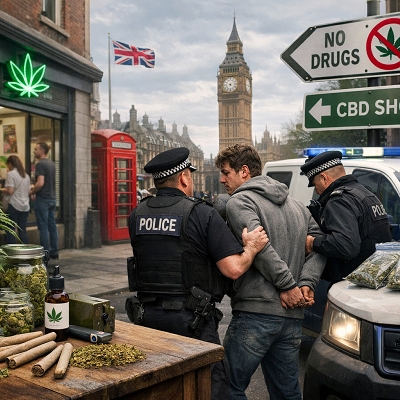
Class B & Confused – why do the UK’s Cannabis laws make no sense in 2026?
The U.K.’s connection to cannabis has always had many contradictions. The country is among the largest exporters of legitimate medical cannabis, however the use of the plant in the home remains governed under outdated legislation dating back to 1971. By this time, 2026 will be the last straw in a growing disparity between State authorized cultivation and prosecution of U.K. residents.
The biggest problem with cannabis is that it falls into the category of a Class B drug. This means that there is an “intermediate zone” between serious legal consequences and a reality of irregular police behavior and business opportunities. Find more news and insights on cannabis in our cannabis news blog.

Legal Aspect
Legal Aspect | Official Statute | Real-World Practice |
Possession | Up to 5 years in prison | Usually results in a “warning” for first-time offenders |
Medical Access | Legal since 2018 via prescription | NHS prescriptions are rare; private clinics dominate |
Cultivation | Strictly prohibited without license | The UK is a top global exporter of pharmaceutical cannabis |
Supply/Dealing | Up to 14 years in prison | Massive “gray market” of CBD and high-street edibles |
Reasons why the system is failing
Three key reasons:
- Export Vs. Domestic Access: The U.K. produces multiple tons of cannabis per year for medical patients across the globe, however, U.K. residents have significant barriers to entry including substantial cost and bureaucracy to obtain the same quality medication using the private sector.
- Postcode Lottery: Based upon whether you live in one borough in London or another part of England, how aggressively your local police force will pursue prosecutions for individual cannabis use varies greatly. There are areas where police focus on general safety and tend to turn their backs on small scale users while there are other authorities who adopt a “no tolerance” stance towards even casual users, thus creating confusion about what constitutes lawful national standards.
- Economic opportunity costs: In contrast to other nations such as Canada, Germany generates billion dollar taxes while the U.K. expends tens of millions of pounds of taxpayers money enforcing prohibition. Enforcement expenditures produce no measurable reductions in consumption levels, but they keep all profits from these sales within illicit black markets.
Paradox of 'private' legality
Although the law allowed for medical use in 2018, the law established two tiers of patients. Those who can afford to pay $300 every month for private consultations and prescription charges can get a “prescription.” Those who cannot afford private access and utilize the same plant to treat the same illness are considered “criminals.”
“Britain’s cannabis policies constitute a contradictory policy paradigm: the British Government operates as a global pharmaceutical wholesaler, yet treats its citizens who participate in the same international pharmaceutical marketplace as low-level criminals.”
Frequently asked questions
- Is cannabis decriminalized in London?
Officially NO. However, there are police pilot programs (for example Greenwich and Lewisham) that have tested diversion schemes whereby individuals charged with minor offenses related to marijuana are diverted away from court and toward support or educational alternatives rather than receiving a criminal record.
- Why doesn’t the UK simply legalize cannabis similar to Germany?
Politically there are many obstacles to reforming the laws in regard to cannabis. Due to fear of backlash from conservative constituents and worry over future implications on Mental Health Services both major political parties are unwilling to endorse complete legalization at this time.
- Can I cultivate my own plants for medical use?
No. Regardless of intent, cultivating ANY number of cannabis plants without a Home Office License is a crime and is defined as the “manufacturing” of a controlled substance.